Install Virtualbox Additions on Centos 7 Guest VM
Install dependencies
sudo yum groupinstall "Development Tools"
sudo yum install kernel-devel
Mount the Virtualbox Additions CD ISO
sudo mkdir /media/cdrom/
sudo mount /dev/cdrom /media/cdrom/
sudo ./VBoxLinuxAdditions.run
I will now use `write_file` to overwrite `content/blogs/2014-07-09-install-virtualbox-additions-on-centos-7-guest-vm.md` with this corrected content.
ARD Mediathek offline viewing on Ubuntu
Since I am a bit of a sucker for German “Krimis” as well as some their excellent documentaries I like to watch ARD Mediathek IPTV. However there are several problems with this when you live at the opposite side of the world. ARD has a block for any films that are 15+ years outside of 20.00h-6.00h GMT+1. Which makes it pretty much impossible to watch at a reasonable time in Australia. I also like to watch these things on the plane which requires download of the media files.
Ubuntu 14.04 Amazon EC2 Cloud Desktop using LXQT
Using Amazon EC2’s free usage tier to host your own cloud desktop is a very economical way to to have a desktop at hand anytime you can not be near one. Since I quite often use Chromebooks these days when on the road this is a particular handy way should I need a full desktop for certain tasks.
Since Ubuntu 14.05 is my default desktop on my normal hardware I obviously want to have my cloud desktop running the same underlying OS. However I don’t think running Unity as the desktop interface would be appropriate via a low-bandwidth remote desktop connection. For this reason I chose LXQT. If you need total stability you probably should go for the more mature LXDE instead, but I have already tried LXQT on an old EEE PC and was very impressed by the speed and low resource usage.
Upgrading Nokia X to CyanogenMod 11 (via Ubuntu)
The Nokia X seems to be a nice piece of hardware for just around $125 AUD. Nothing spectacular in terms of computing power, but much better build quality than your average cheap Chinese Android clone. I have always been a fan of Nokia hardware until they decided to commit suicide by firstly adding CEO Stephen Elop and ditching all of their software for Windows Mobile.
The problem with the device out of the box is that is has a horribly butchered version of Android. And by horribly I mean way worse than the usual bloat and crapware that poor Samsung, HTC or Sony users are normally subjected to. Hopefully this is only Nokia’s first step to a more open platform, but I wouldn’t hold my breath on that one.
Upgrade Rikomagic MK902 Android MiniPC from Ubuntu
If there would be an Oscar for the WORST firmware upgrade procedure (and associated drivers, documentation and general quality of software) Rikomagic should win this by a country mile !
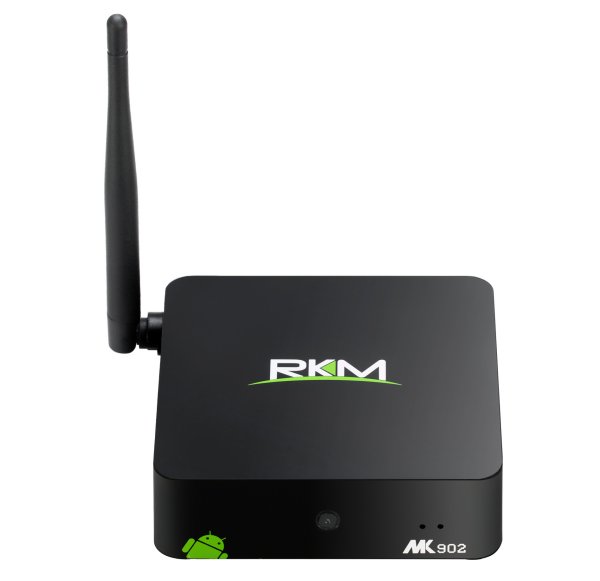
Since all the information I found on the interwebs said Linux was not supported I ended up borrowing friends notebooks (as I don’t own any Windows machinery anymore). My main Toshiba Ultrabook seemed to have issues with picking up the USB from a Windows Virtual Machine). After not being able to get the absolute crap USB drivers that come with the firmware download with any of the machines (Vista & Win7_64) I was ready to throw in the towel and put the purchase of this unit (in hindsight I would not do it again anyway) down as a total waste.
Install Google Earth on Ubuntu 14.04
Trying to install Google Earth on Ubuntu. You could just download the .deb file and run dpkg command, however I prefer to use it via a repo to make sure upgrades are installed as part of the system upgrades.
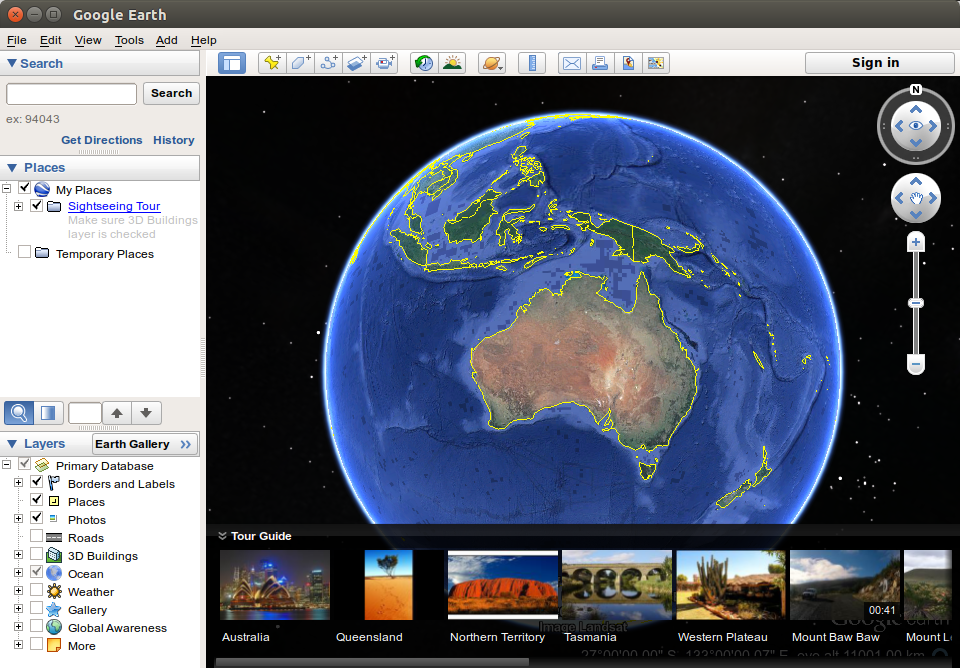
http://www.google.com/earth/download/ge/
Google Keys
Note: this should not be necessary if you have use the GoogleTalk plugin or similar package from the Google DEB Repo
cd /tmp/
wget https://dl-ssl.google.com/linux/linux_signing_key.pub
sudo apt-key add linux_signing_key.pub
rm linux_signing_key.pub
Add Google Earth Repo
sudo vim /etc/apt/sources.list.d/google.list
#add the following line
deb http://dl.google.com/linux/earth/deb/ stable main
sudo apt-get update
sudo apt-get install google-earth-stable
NOTE: While this should be enough on 32bit versions of Ubuntu 14.04 unfortunately it turns out that there is a dependency problem with the 64bit version
Android SDK issues on Ubuntu 14.04 64bit
Since the upgrade to Ubuntu 14.04 (Trusty Tahr) I have had issues running the Android SDK Tools. For example this error:
./adb
bash: ./adb: No such file or directory
Check the multi-arch architectures installed on the system.
sudo dpkg --print-architecture
Mine only showed ‘amd64’. Turns out you need to add the i386 architecture and install libc6:i386,libncurses5:i386,libstdc++6:i386 library packages.
sudo dpkg --add-architecture i386
sudo apt-get update
sudo apt-get install libc6:i386 libncurses5:i386 libstdc++6:i386
sudo ./adb
LXQt - extending the life of my trusty old EEE PC (even further)
My old Asus EEE PC 900 is the oldest piece of hardware I own. With an old Intel Atom processor and 1GB of RAM it’s never was the fastest kid on the block (in fact I never considered the Windows XP version of the same unit usable as it was very sluggish). However after owning it for nearly 7 years I am very surprised I can still use it. Granted I only use it occasionally when I am at home, but thanks to LXDE it was still usable. I recently learned that LXDE is merging with the Razor-Qt project (great idea!) to create the combined LXQT – an ultra-low resource window manager.
Google Android Studio - Ubuntu repository install
Thanks to Paolo Rotolo there is now a Ubuntu Launchpad PPA for Android Studio
sudo apt-add-repository ppa:paolorotolo/android-studio
sudo apt-get update
sudo apt-get install android-studio
Synology OpenVPN connection from Android
Connecting securely to your home network has always been a bit of a challenge since common home ADSL routers not normally contain any VPN Servers (those which do contain such are generally PPTP servers which I would hardly call secure these days). Which is probably a good thing as they would be horribly out of date considering the firmware release policies of retail router manufacturers. You could run/maintain your own dedicated server, but for most home networks that is overkill and out of the technical depth of most hobbyists. However NAS Appliances are becoming more useful in home networks for storage and other common tasks. I have had good experiences with Synology NAS devices over a number of years and the latest iteration also has a very useful VPN Server package available based on OpenVPN (as most Synology Apps are common Open Source components).
Ubuntu 14.04 - post-install enhancements for Trusty Tahr
Excellent coincidence that the release of Ubuntu 14.04 LTS (Trusty Tahr) fell into the Easter holidays. This gives me the time to install earlier than I normally have time for.

This realease being a LTS (long-term support) release means it is a fairly conservative release. There are some nice enhancements and most importantly for me the 3.13 Kernel means finally Wacom Touch devices are supported without kernel mods.
Fixing UEFI Secure Boot problems on Ubuntu 14.04
Unfortunately the mess that is UEFI Secure Boot still causes issues on some hardware. In my case it’s a Toshiba Z930 Ultrabook. I have documented the procedure to get it working here.
However it turns out that there is no ‘Trusty’ release for the boot-repair utility. The fix is relatively easy.
sudo vim /etc/apt/sources.list.d/yannubuntu-boot-repair-trusty.list
#change the following line from 'trusty' to 'saucy'
sudo vim /etc/apt/sources.list.d/yannubuntu-boot-repair-trusty.list
You can then just finish with